


In January 2025, a Tesla Cybertruck wrapped in Electra’s logo pulled out of Boston and pointed west. Its destination was Las Vegas — 3,000 miles away. What made the drive remarkable wasn’t the vehicle. It was what was running inside it.
Electra’s AI was managing the battery in real time: predicting every charge stop before it was needed, extending battery life cycle by cycle, and delivering 20% more range than the truck could achieve on its own. No breakdowns. No surprises. No range anxiety. The truck knew things about itself that no battery had ever known before.
That drive was a proof-of-concept. On April 17, 2026, it started its process to become a public company.
Electra and Iron Horse Acquisition II Corp. (Nasdaq: IRHO) have announced a definitive Business Combination Agreement that will list Electra on Nasdaq — creating the world’s first publicly traded pure-play AI battery intelligence company, backed by over $230 million in Iron Horse’s trust.
The problem hiding in plain sight
There is a strange and costly irony at the heart of the global energy transition. The world has spent the last decade manufacturing the most sophisticated batteries in history. Costs have fallen faster than almost any analyst predicted. Gigafactories have multiplied. EVs are on the road. Grid-scale storage is being deployed at unprecedented scale.
And yet almost every single one of those batteries is operating blind.
They degrade in ways they cannot see. They fail in ways they cannot predict. A thermal runaway event that makes headlines. A BESS installation leaving 30% of its value on the table. An EV driver stranded because the range estimate was off by 20%. These aren’t edge cases. They are the predictable consequence of a multi-trillion-dollar industry still managed with instrumentation that hasn’t fundamentally evolved in decades.
The industry’s answer, until now, has been brute force. More batteries. Heavier packs. Bigger cells. More redundancy built into hardware to compensate for what the software couldn’t see. The result: EVs that weigh thousands of pounds more than they should. Grid installations that cost tens of millions more than necessary. A global battery supply chain — mining lithium, cobalt, and manganese at enormous environmental cost — manufacturing cells that then operate at 60 to 70 percent of their engineered potential.
The answer was never more batteries. It was smarter ones.
Born from NASA, forged in the field
Fabrizio Martini, Electra’s co-founder and CEO, traces the origin of the company to a specific kind of pressure. Working with the Department of Energy, the Department of Defense, and NASA — building power systems for balloons and rovers operating at the absolute edge of what batteries could do — he understood failure in a way most engineers never have to. Every failure was catastrophic and irreversible. The obsession that grew from that environment: knowing what a battery is going to do before it does it.
That obsession became Electra, founded in 2015. A decade of work — starting from NASA Goddard Space Flight Center research, forged through DOE and DOD contracts, validated in production with OEMs, Tier 1 supplier, energy players — produced something no one else has built: a platform that predicts a battery failure three months before it happens, extends asset life by three to five years, and does it across any chemistry, any hardware, at any scale.
The technical foundation is the combination of physics-based modeling and machine learning — inseparable, reinforcing each other. That pairing is why the platform achieves less than 1% average error in state estimation. And it is why no one has replicated it.
What battery intelligence actually unlocks
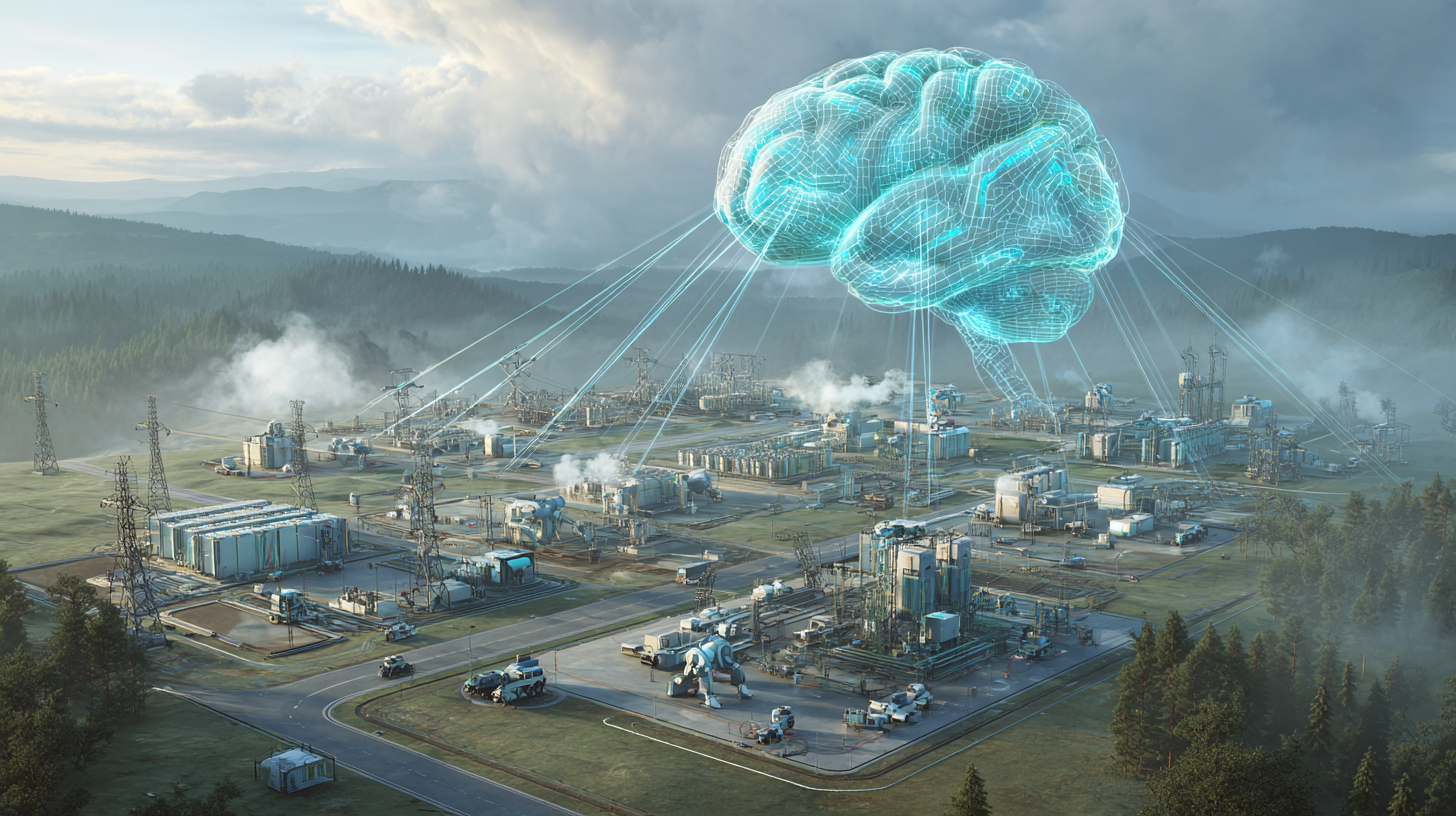
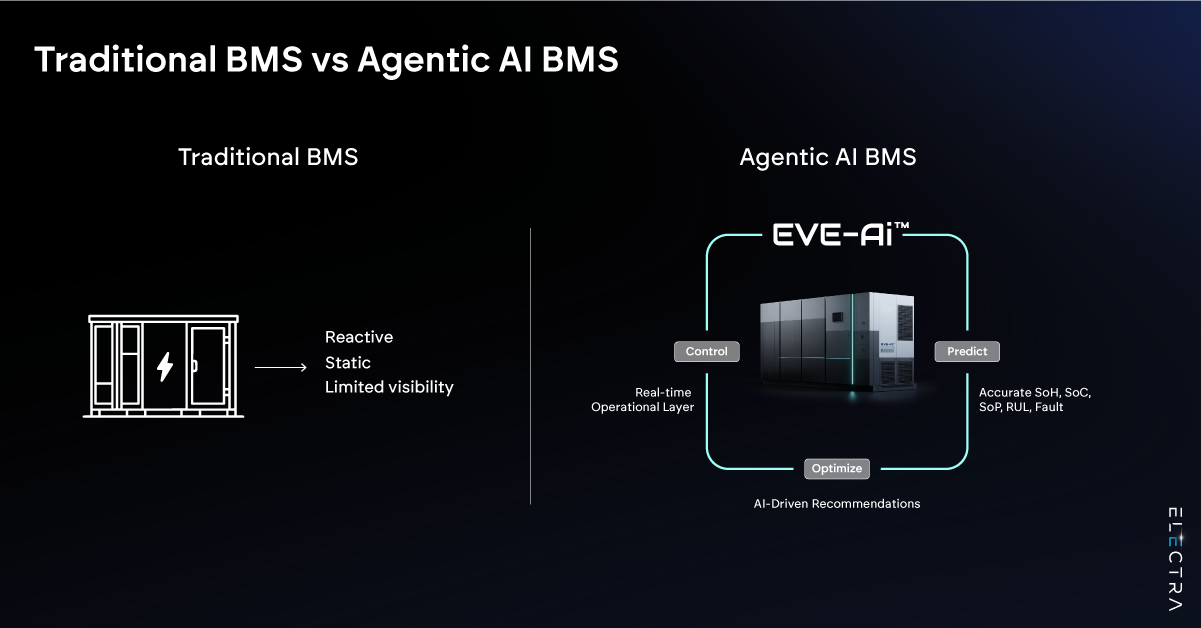
Electra’s platform operates across three layers simultaneously: cloud analytics, edge AI embedded directly in the battery management system, and physical AI that makes real-time control decisions at the hardware level. The result is a battery that doesn’t just report data — it reasons about itself.
- Up to 3 months in Advance warning before battery failure
- Extend operational life delivered to battery assets
- Higher ROI over standard BESS operations
For example to a BESS operator running a $10 million installation, three extra operational years is not a feature — it is transformative cash flow. For an EV fleet, 20% range extension and 33% fewer charging stops translate to roughly $1,000 saved per vehicle per year.
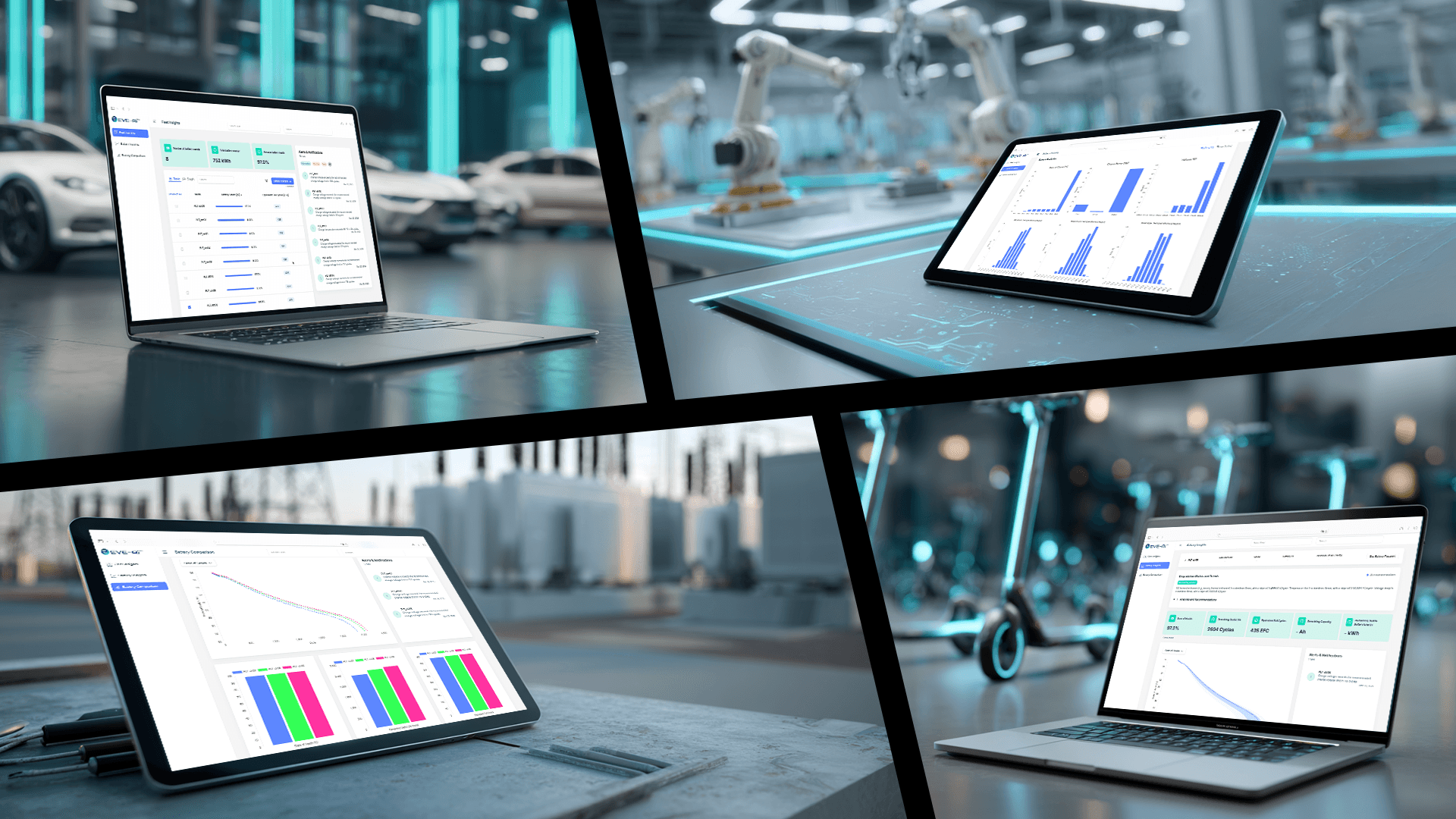
This is software-quality economics applied to one of the world’s largest hardware industries. And because Electra’s platform is chemistry-agnostic and hardware-agnostic, it deploys across EVs, grid storage, drones, data centers, and robotics without re-engineering for each application.
The intelligence layer the transition was missing
The energy transition has an infrastructure layer. It has a policy layer. It has an economic layer. What it has been missing — and what Electra is now making permanent — is the intelligence layer.
Batteries don’t underperform because the chemistry is wrong. They underperform because nothing is truly managing them: watching what happens inside them at the cell level, in real time, across the full lifetime of the asset.
The gap between what hardware can store and what intelligence can unlock is the market Electra was created to own.
Strategic investors understood this early. Stellantis, BlackBerry, and Ferrari Family Investments didn’t just buy Electra’s product — they bought equity in the company. NVIDIA selected Electra for its Inception Program, actively co-developing a dedicated AI accelerator for BMS and EMS applications. NASA’s Spinoff program — the gold standard for space-to-commercial technology transfer — recognized Electra’s roots in Goddard Space Flight Center research. Electra holds four issued U.S. patents with six additional patent families filed.
“Every battery installed anywhere on earth is a potential customer. And as the grid gets bigger, the EV fleet grows, and the robot fleet expands, Electra’s data advantage compounds.”
— Giovanni Rossi, Head of Marketing and Communications, Electra
What going public means
Electra enters public markets at a specific and deliberate moment. The IEA’s World Energy Investment report puts clean energy capital flows at $3.3 trillion in 2025 alone. That capital is moving into cells, packs, and systems at an unprecedented scale. The question that capital has not yet fully answered is how to make all of that investment perform. That is Electra’s answer — and going public is how it scales.
The transaction gives Electra access to the Iron Horse trust — $230 million — along with the public currency, visibility, and institutional relationships that come with a Nasdaq listing. Financial advisors Roth Capital Partners and Park Avenue Capital are advising Electra; Cantor Fitzgerald served as underwriter to Iron Horse. The combined company will remain Nasdaq-listed under a new ticker, incorporated in Delaware, with closing expected in the second half of 2026.Electra will become the first publicly traded pure-play AI battery intelligence company in the world!
The Cybertruck drove coast to coast in January 2025 and arrived without incident. The AI knew things about that battery that no system had ever known. That knowledge — scaled to every EV, every grid, every data center, every robot — is what Electra is building toward.
The era of dumb batteries is over. Wherever there is a battery, there’s Electra!
Forward-Looking Statements
This communication contains “forward-looking statements” within the meaning of Section 27A of the Securities Act of 1933 and Section 21E of the Securities Exchange Act of 1934, including statements regarding the proposed business combination between Electra Vehicles, Inc. (“Electra”) and Iron Horse Acquisition II Corp. (“Iron Horse”), the expected timing and benefits of the transaction, Electra’s market opportunity, product capabilities, commercial traction, and future financial and operating performance. Words such as “will,” “expect,” “believe,” “predict,” “extend,” “deliver,” “unlock,” “scale,” and similar expressions identify forward-looking statements.
These statements are based on current expectations and assumptions and are subject to risks and uncertainties that could cause actual results to differ materially, including but not limited to: the ability to complete the business combination on the anticipated timeline or at all; the satisfaction of closing conditions, including regulatory and shareholder approvals; the amount of redemptions by Iron Horse public shareholders; Electra’s ability to execute its commercial strategy; customer adoption rates; competition; the evolution of battery technology and the energy transition; and other risks described in Iron Horse’s filings with the U.S. Securities and Exchange Commission (SEC).
Readers are cautioned not to place undue reliance on forward-looking statements, which speak only as of the date made. Neither Electra nor Iron Horse undertakes any obligation to update these statements except as required by law.
Performance Claims and Product Data
Performance figures cited in this communication — including “20% more range,” “33% fewer charging stops,” “up to 3 months advance warning of battery failure,” “3 to 5 year life extension,” “less than 1% average error in state estimation,” and “~$1,000 saved per vehicle per year” — reflect results observed in specific testing environments, pilot deployments, or customer engagements under defined operating conditions. Actual results will vary based on battery chemistry, hardware configuration, use case, environmental factors, and deployment context. Past performance is not indicative of future results. These figures are not guarantees of outcomes for any specific customer or application.
The January 2025 Boston-to-Las Vegas vehicle demonstration was a controlled proof-of-concept conducted by Electra. Results were specific to that vehicle, route, and conditions and should not be interpreted as representative of general product performance.
Financial Information
The reference to “$230 million in Iron Horse’s trust” reflects the approximate amount held in Iron Horse’s trust account as of the announcement date and is subject to redemptions by Iron Horse public shareholders in connection with the business combination. The actual cash available to the combined company at closing may be materially lower. The $3.3 trillion clean energy investment figure is sourced from the IEA World Energy Investment 2025 report and is attributed to the IEA, not to Electra or Iron Horse.
Intellectual Property and Partnerships
References to NASA, the NASA Spinoff program, NASA Goddard Space Flight Center, the U.S. Department of Energy, and the U.S. Department of Defense reflect historical research relationships and technology heritage. No endorsement by any U.S. government agency is stated or implied. References to Stellantis, BlackBerry, Ferrari Family Investments and NVIDIA reflect existing commercial or investment relationships and do not imply endorsement of the proposed business combination or of any forward-looking statements contained herein. The NVIDIA Inception Program is a startup accelerator program and participation does not constitute a partnership, endorsement, or co-development commitment by NVIDIA beyond the program’s stated terms.
“Issued U.S. patents” and “patent families filed” reflect Electra’s patent portfolio as of the date of this communication and are subject to change.
No Offer or Solicitation
This communication is for informational purposes only and does not constitute an offer to sell, a solicitation of an offer to buy, or a recommendation to purchase any securities of Electra, Iron Horse, or the combined company, nor shall there be any sale of securities in any jurisdiction in which such offer, solicitation, or sale would be unlawful. Any offer of securities will be made only by means of a prospectus meeting the requirements of Section 10 of the Securities Act of 1933, as amended, or an exemption therefrom.
Important Information About the Transaction and Where to Find It
In connection with the proposed business combination, Iron Horse intends to file with the SEC a registration statement on Form S-4 that will include a proxy statement/prospectus. Investors and security holders are urged to read the registration statement, the proxy statement/prospectus, and all other relevant documents filed with the SEC carefully when they become available, because they will contain important information about Electra, Iron Horse, and the proposed transaction. Documents filed with the SEC will be available free of charge at www.sec.gov.
Participants in the Solicitation
Electra, Iron Horse, and their respective directors, executive officers, and certain employees may be considered participants in the solicitation of proxies from Iron Horse’s shareholders in connection with the proposed business combination. Information regarding these participants and their interests will be set forth in the proxy statement/prospectus when it is filed with the SEC.